


Suivre l’actualité de ce titre (promotion, parution...)

Résumé

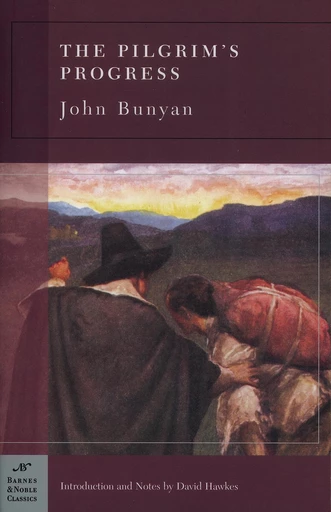
The Pilgrims Progress, by John Bunyan, is part of the Barnes & Noble Classics series, which offers quality editions at affordable prices to the student and the general reader, including new scholarship, thoughtful design, and pages of carefully crafted extras. Here are some of the remarkable features of Barnes & Noble Classics:
  • New introductions commissioned from todays top writers and scholars
  • Biographies of the authors
  • Chronologies of contemporary historical, biographical, and cultural events
  • Footnotes and endnotes
  • Selective discussions of imitations, parodies, poems, books, plays, paintings, operas, statuary, and films inspired by the work
  • Comments by other famous authors
  • Study questions to challenge the readers viewpoints and expectations
  • Bibliographies for further reading
  • Indices & Glossaries, when appropriate
All editions are beautifully designed and are printed to superior specifications; some include illustrations of historical interest. Barnes & Noble Classics pulls together a constellation of influences—biographical, historical, and literary—to enrich each readers understanding of these enduring works.

Faith, Hope, Mercy, Envy, Ignorance, Guilt: These are not abstract concepts, but the names of vividly imagined, sharply drawn human characters encountered by Christian, the hero of The Pilgrim’s Progress. In John Bunyan’s seventeenth-century allegory of the soul’s search for salvation, each step along the way becomes a dramatic rendering of an inner state of the human psyche. As Christian journeys from “the wilderness of this world” to the glory of the Celestial City, he confronts a seemingly endless array of temptations, threats, and dangers, including the nearly irresistible allure of material splendor at Vanity Fair; the crushing psychological burden of depression and despair in the Slough of Despond; and the fear and uncertainty that eats away at faith in Doubting Castle.

This edition includes both the first and second parts of The Pilgrim’s Progress, which collectively reflect the feverish intensity of Bunyan’s religious beliefs. What remains significant is Bunyan’s ability to transform this intensity into an allegory that speaks to people of all faiths and all eras.

David Hawkes is Associate Professor of English at Lehigh University. His books include Idols of the Marketplace (2001) and Ideology (second edition 2003), and he has contributed articles to The Nation, the Times Literary Supplement, and the Journal of the History of Ideas.

Auteur

  • John Bunyan (auteur)

    Bunyan was born in 1628 in the heart of England, a mile south of Bedford a few years before the English Civil War. His family was so poor that when his father died, John was left only one shilling and his tinker's anvil. The boy had little formal education. However, he learned to read and feasted on medieval romances in which valiant knights underwent great trials and conquered villains and monsters. In youth he boasted a mouth so profane it shocked even wicked men. Additionally, he loved to dance, bell-ring and lead Sunday sports, all considered improper by Puritans. Although he attended church, he had little religious feeling.John turned sixteen in 1644 at the height of the Civil War. He joined the army. Since Bedford was a Parliamentarian stronghold, it is probable he served Cromwell. While on duty he was "drawn out" to take part in a siege. Another soldier asked to take his place. "[A]s he stood sentinel he was shot in the head with a musket bullet and died." John came to see this as proof God had spared his life for a great work.Returning home, John married. He was twenty. His wife was as poor as he; between them, they did not have a dish or spoon. Her godly father had furnished her with two Christian books--books which John read with an increasingly troubled conscience. One Sunday as he played, he heard a voice. "Will you leave your sins and go to Heaven, or have your sins and go to Hell?" His distress was acute. He felt that he had sinned so gravely he was beyond forgiveness. Nonetheless, he struggled to find peace with God by obeying scriptural commands. Outwardly, he reformed and put off swearing and improper sports. Inwardly, he still longed to participate. He read the Bible. Although without peace, he thought God must be pleased with him.One day he overheard four women speaking of their inner religious experience, and he realized he lacked something. Leaving the Church of England, he joined their fellowship. Still, he lacked peace. Only after reading Luther's commentary on Galatians did he realize he could be justified by faith alone. His inner struggles were not over, but he found relief. Bunyan felt compelled to tell others of faith in Christ. He became a field preacher. So effective were his words, people would arrive at dawn to hear him preach at noon.

Auteur(s) : John Bunyan

Caractéristiques

Auteur(s) : John Bunyan

Publication : 1 juin 2009

Intérieur : Noir & blanc

Support(s) : Livre numérique eBook [ePub]

Contenu(s) : ePub

Protection(s) : Marquage social (ePub)

Taille(s) : 6,22 Mo (ePub)

Langue(s) : Anglais

EAN13 Livre numérique eBook [ePub] : 9781411432925

EAN13 (papier) : 9781593082543

Les promos du moment